


AI is booming, but AI crypto tokens are missing the rally
Artificial Intelligence (AI) is booming, but AI crypto tokens are struggling to keep up. In May, Anthropic raised $65 billion at a $965 billion valuation, while the entire AI-coin sector is worth around $25 billion. Meanwhile, Nvidia reported $96.2 billion in quarterly revenue in July, up 106% from a year earlier.
The disconnect is striking: capital is pouring into AI, yet most major AI-related cryptocurrencies remain 70%-90% below their 2024-2025 highs.
The reason may be where investors see the value. Venture capital is increasingly targeting AI infrastructure, compute, agents and other businesses with measurable revenue, rather than simply buying the tokens attached to the AI narrative.
The AI boom is real, but AI crypto tokens are missing the rally
The AI market, valued at $391 billion in 2025, is projected to grow from $540 billion in 2026 to roughly $3.5 trillion by the end of 2033, according to a report by Grand View Research.
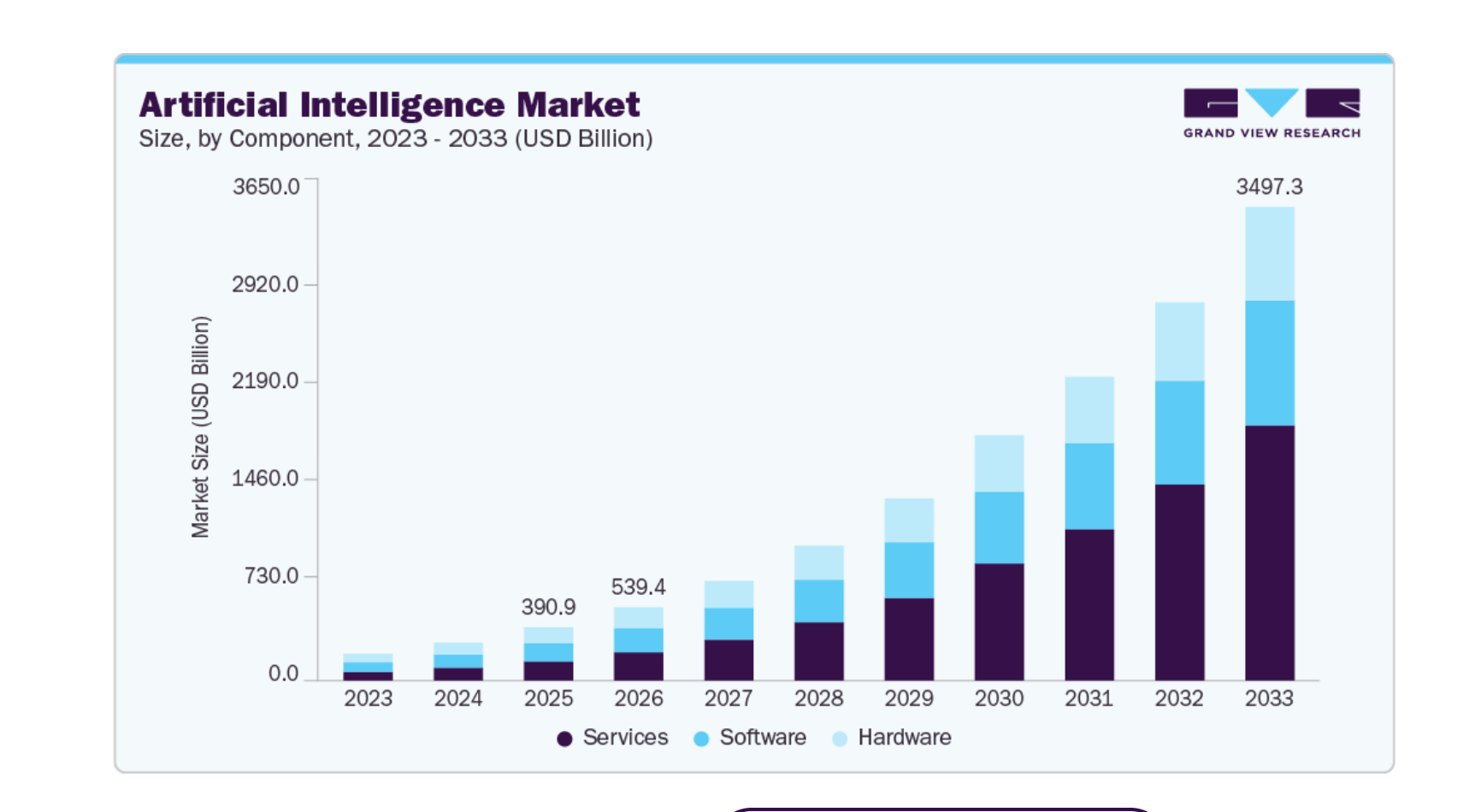
In contrast, most of the best-known AI coins sit approximately 70%-90% below their 2024-2025 highs. Near Protocol (NEAR), the largest AI coin by market capitalization, is down 77% from its record high; Bittensor (TAO) is down 60%, while Internet Computer (ICP) is 99% below its all-time high. Although some projects are higher than they were 12 months ago, the larger share in the basket sits below cycle highs.
Despite the visible mismatch between the broader AI market and the smaller AI crypto sector, CoinGecko lists 1,473 projects at the intersection of Artificial Intelligence and blockchain technology. This underpins reports that 40% of crypto Venture Capital (VC) funding is going to AI-adjacent infrastructure, including compute, identity, agent frameworks and verification, according to BlockEden.xyz.
Where is smart money moving?
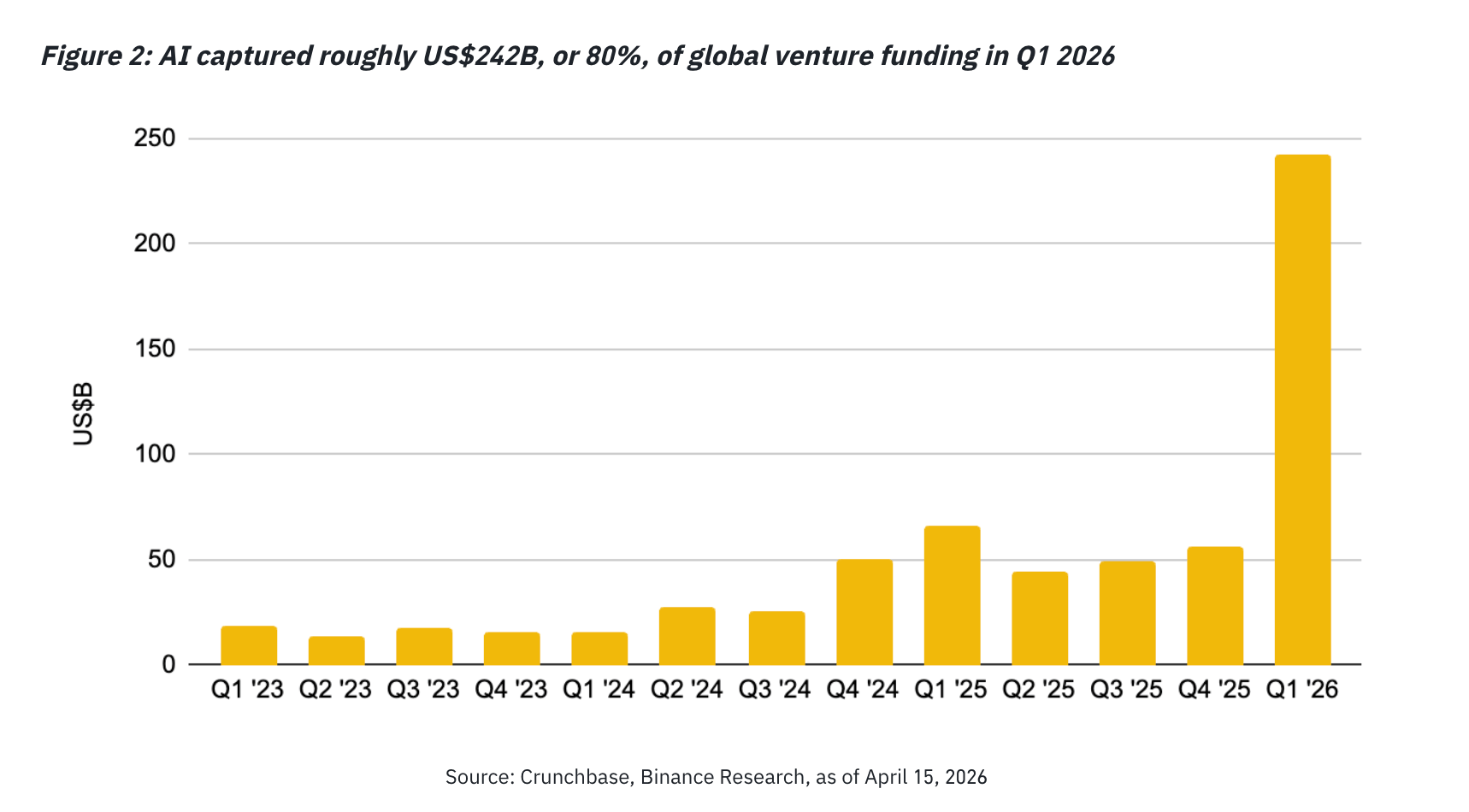
Global venture capital funding is concentrating primarily on one theme. That theme is AI, accounting for roughly $240 billion of global VC funding, or 80% in Q1 2026. This capital centralization speaks volumes not only for AI but also for crypto, as it will likely continue to shape strategic priorities and force most companies to reassess how the technology fits into their competitive advantage.
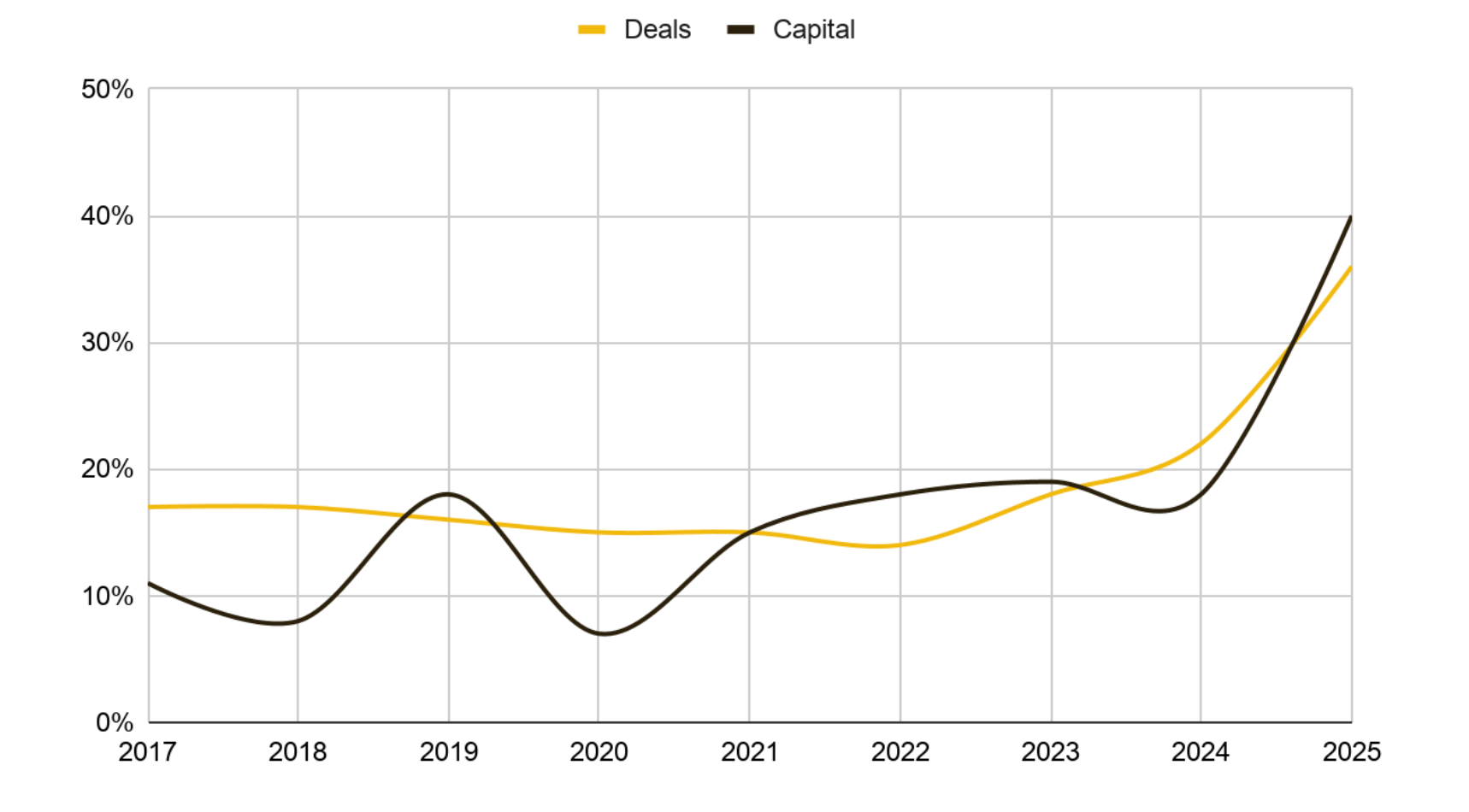
As the VC landscape shifts, 40% of every dollar invested in crypto-related entities is currently allocated to companies building products at the intersection of AI and blockchain technology. That is more than double the 18% observed a year earlier, according to Binance Research.
The surge in capital entering AI is setting new records. According to Gartner, global AI spending is projected to climb from $1.76 trillion in 2025 to $2.52 trillion in 2026, ultimately reaching $3.34 trillion by 2027. Notably, AI infrastructure is expected to account for the largest share of this investment.
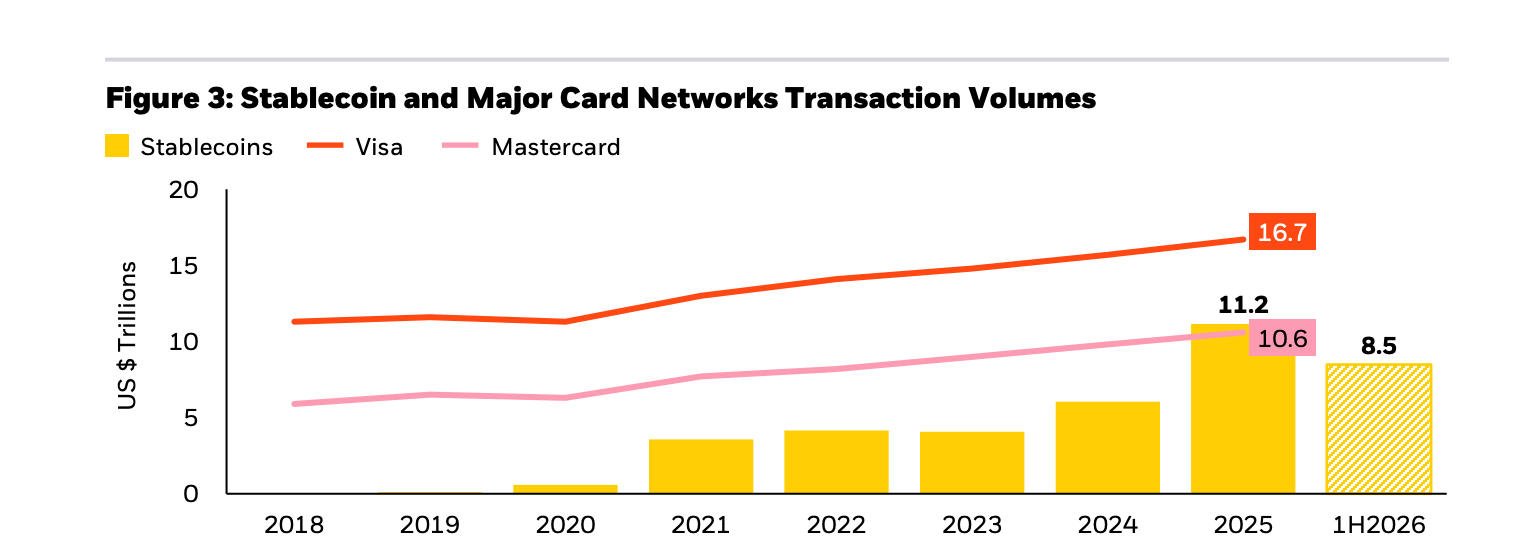
It is becoming clearer how crypto is shaping the future of AI and the rise of agents that operate within predefined parameters to monitor, decide and execute. This execution includes making transactions, powered by smart contracts and stablecoins. Crypto presents the execution layer that AI agents need.
Why the capital does not hit the coin
AI coins captured 35.7% of the crypto market’s attention in Q1 2026, according to CoinGecko’s quarterly narrative report. Meme coins came in second at 27.1%. Together, the two narratives commanded 62.8% of total mindshare, leaving decentralized finance (DeFi), real-world assets (RWA), Layer-1s, and infrastructure to share the remaining 37.2%.
Yet attention is not capital, given the massive drawdowns across AI coins. With the AI coins sector’s $25 billion market capitalization against the larger $2.86 trillion crypto market size, investors aren't holding their money in the booming theme.
That doesn't mean money is no longer flowing into AI-related crypto projects. It shows investors are objectively prioritizing known, revenue-backed infrastructure protocols over speculative tokens.
Bittensor, Render (RNDR) and Virtuals Protocol (VIRTUAL) represent the sector's gold standard, building revenue-backed infrastructure. For instance, Bittensor earned $43 million in Q1 2026 revenue, driven by real AI usage. The broader market was watching, with Nvidia disclosing approximately $420 million invested in TAO, the underlying token. Polychain Capital also provided more targeted funding of roughly $250 million, while Grayscale launched Bittensor Trust (GTAO) with $13 billion in managed assets. This was the first regulated investment fund for TAO.
Although Render’s narrative is smaller than Bittensor's, it is structurally similar. The protocol posted roughly $18 million in quarterly revenue, backed by GPU rendering activity. Render integrated approximately 60,000 of Salad Network’s GPUs and launched a dedicated AI workload subnet called Dispersed. The network’s market capitalization briefly doubled to $1.2 billion in early 2026, driven by rising investor exposure and growing adoption on Blender and Cinema 4D, putting Render in front of over 2 million users, BlockedEden.xyz reports.
A closer look reveals value-driven investment. Global VC attention is growing but focused on actual infrastructure and measurable units of work and tokens that directly capture fees from the workload. Another layer is the institutional infrastructure across staking, Exchange-Traded Funds (ETFs) and custody services. Strip a project of these elements, and you are left with a speculative logo and tokenomics that consistently fail to attract sustainable capital.
Virtuals Protocol, by contrast, is a clear example of investor mismatch that has led to token degradation. In practice, the platform functions well, executing on Base, an Ethereum Layer-2 network. The protocol enables non-coder users to create, own and monetize AI agents across areas such as gaming, entertainment and digital commerce.
At its peak, VIRTUAL hit a record high slightly above $5.00, with its market capitalization running into the lower $5 billion range. However, the token currently sits at $462 million in market size, recovering from September lows of $378 million.
Although the platform remains structurally sound, its value-capture method misses the mark. Agent developers on the platform retain all revenue generated, leaving VIRTUAL token holders out. While some may argue that token value depends on the rate of the token burn program, this is, to a certain extent, unfair, especially compared to equity investors, who are accorded rights and earn dividends.
Extrapolate the Virtuals Protocol model across the larger AI crypto landscape, and you begin to notice a pattern of token investor mismatch. This is evident in AI-related projects including Ai16z (AI16Z), Fartcoin (FARTCOIN) and Gamebuild (GAME). Venture capital funds back projects with structural solutions to real-world problems, while ordinary investors get stuck chasing hype in a narrative that bleeds money through speculation without solid support.
AI and digital assets future
It would be too simplistic to assume the drawdowns among AI coins mean the sector is dead or will eventually disappear. Crypto provides the infrastructure AI agents need to perform tasks autonomously, seamlessly and more cheaply compared to traditional finance (TradFi) solutions. BlackRock’s latest research paper calls AI and digital assets two technologies defining the current era’s theme.
“AI represents machine-native intelligence, while digital assets represent machine-native money, BlackRock’s report states, adding, “this alignment becomes particularly important with the rise of agentic AI…with blockchains providing the programmable infrastructure that connects intelligence with economic activity.”
Blockchains and LLMs will continue to share a distinct future of collaboration on tokenized architectures. Agentic AI and machine-to-machine payments are expected to increase exponentially, with demand for blockchains rising in tandem.
BlackRock adds that “stablecoins, native cryptoassets, and other on-chain assets can serve as machine-native instruments for payment and settlement across these rails.”
Compute is another emerging area, presenting a potentially large market for digital assets, with spending forecasted to reach $1 trillion by 2030. This is a promising use case for digital assets, particularly financing and programmable settlement.
Conclusion
The intersection of AI and blockchain technology is still in its early stages, with global venture capital funding expected to increase through 2030 and even 2033. However, this growth is unlikely to be witnessed uniformly across AI coins. Of course, investors should expect some outliers, as we have seen with Bittensor and Render.
The market needs to normalize the importance of the revenue-to-incentive ratio going forward if investors want value for their money. Speculation may have worked during the 2024-2025 bull cycle, but that window is quickly closing.
Lastly, investors should follow activity, including transactions, volume and infrastructure development. Partnerships bridge markets and drive development, and they will remain key to realizing the future of AI and digital assets.
Bitcoin, altcoins, stablecoins FAQs
Bitcoin is the largest cryptocurrency by market capitalization, a virtual currency designed to serve as money. This form of payment cannot be controlled by any one person, group, or entity, which eliminates the need for third-party participation during financial transactions.
Altcoins are any cryptocurrency apart from Bitcoin, but some also regard Ethereum as a non-altcoin because it is from these two cryptocurrencies that forking happens. If this is true, then Litecoin is the first altcoin, forked from the Bitcoin protocol and, therefore, an “improved” version of it.
Stablecoins are cryptocurrencies designed to have a stable price, with their value backed by a reserve of the asset it represents. To achieve this, the value of any one stablecoin is pegged to a commodity or financial instrument, such as the US Dollar (USD), with its supply regulated by an algorithm or demand. The main goal of stablecoins is to provide an on/off-ramp for investors willing to trade and invest in cryptocurrencies. Stablecoins also allow investors to store value since cryptocurrencies, in general, are subject to volatility.
Bitcoin dominance is the ratio of Bitcoin's market capitalization to the total market capitalization of all cryptocurrencies combined. It provides a clear picture of Bitcoin’s interest among investors. A high BTC dominance typically happens before and during a bull run, in which investors resort to investing in relatively stable and high market capitalization cryptocurrency like Bitcoin. A drop in BTC dominance usually means that investors are moving their capital and/or profits to altcoins in a quest for higher returns, which usually triggers an explosion of altcoin rallies.
Bài viết đề xuất


